
Video & Smart-glass AssessmentPilot
Bring practical evidence into the picture.
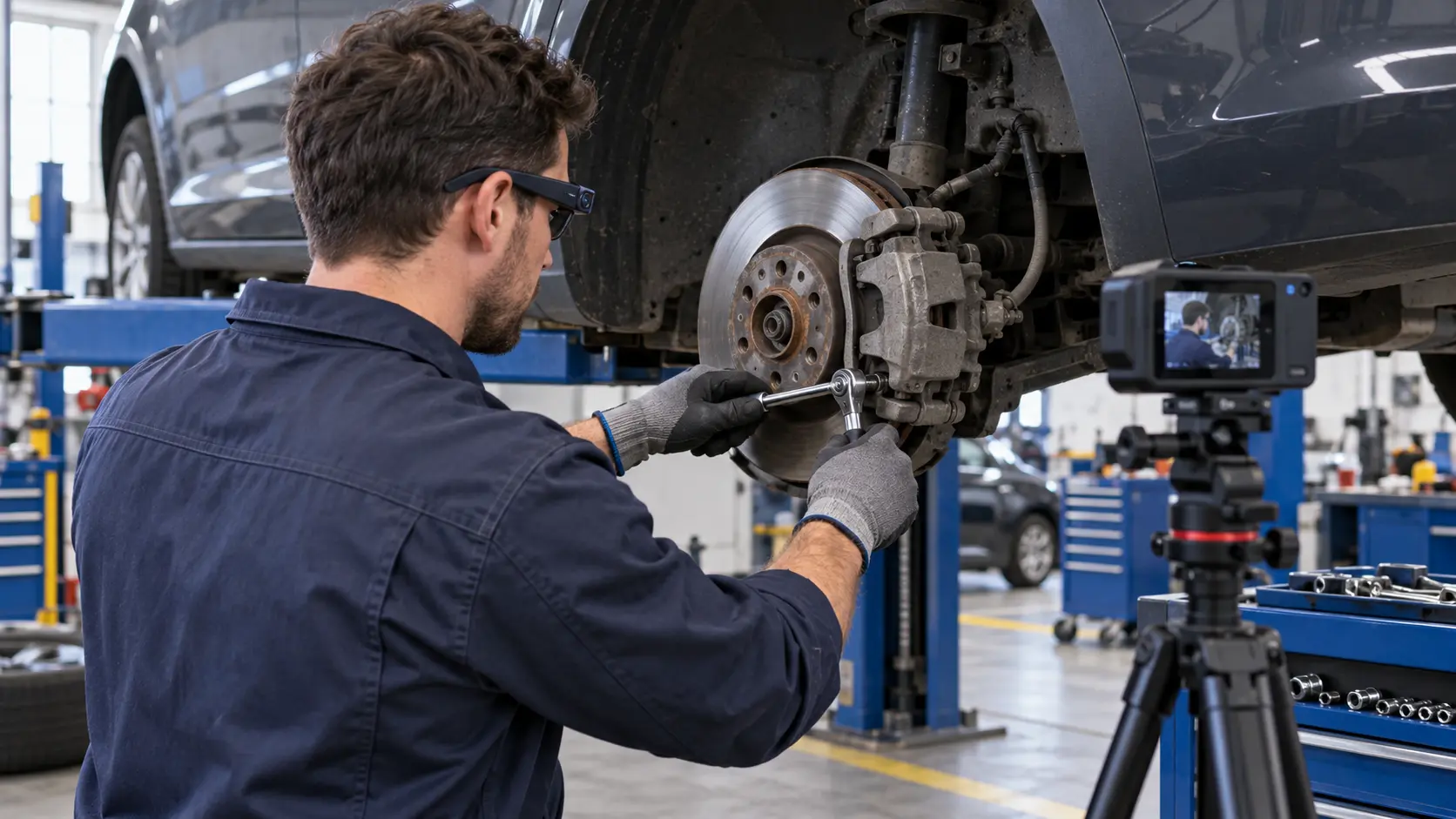
Explore photo and video evidence evaluation in pilot, grounded in defined role and task requirements.
The questions that matter
01
What practical actions need to be observed?
02
Which evidence supports the requirement?
03
Where is assessor judgement still needed?
How it works
Four steps.
Your experts stay in charge.
MOBILAR® MCPContextual skills model
Define observable actions
Pilot: observation requirements
| Checkpoint | Evidence needed |
|---|---|
| Vehicle positioned | Position visible |
| Target distance | Measurement visible |
| Result | Diagnostic result visible |
- Checkpoint
- Vehicle positioned
- Evidence needed
- Position visible
- Checkpoint
- Target distance
- Evidence needed
- Measurement visible
- Checkpoint
- Result
- Evidence needed
- Diagnostic result visible
Scope of the work
What this involves.
You start with
A practical activity that can be recorded and the requirements the recording should address.
What you get
A recorded view of practical work an assessor can review against defined checkpoints.
What it does not claim
This is a pilot. Camera evidence supports assessor judgement; it does not score a skill by itself.
Uncover skills · Discover capability · Decide better
One contextual skills framework.
Tasks and work context, required skills and competence evidence, connected through a shared foundation.
- Define relevant observable actions first.
- Evaluate photo/video evidence in pilot.
- Discuss evidence capture and integration scope for your situation.
Next step
Let’s talk.
Tell us what you’re working on. We’ll explore where MOBILAR® could help and whether a demo or a conversation about your network is the right next step.