
Editorial illustration
Context changes the requirement
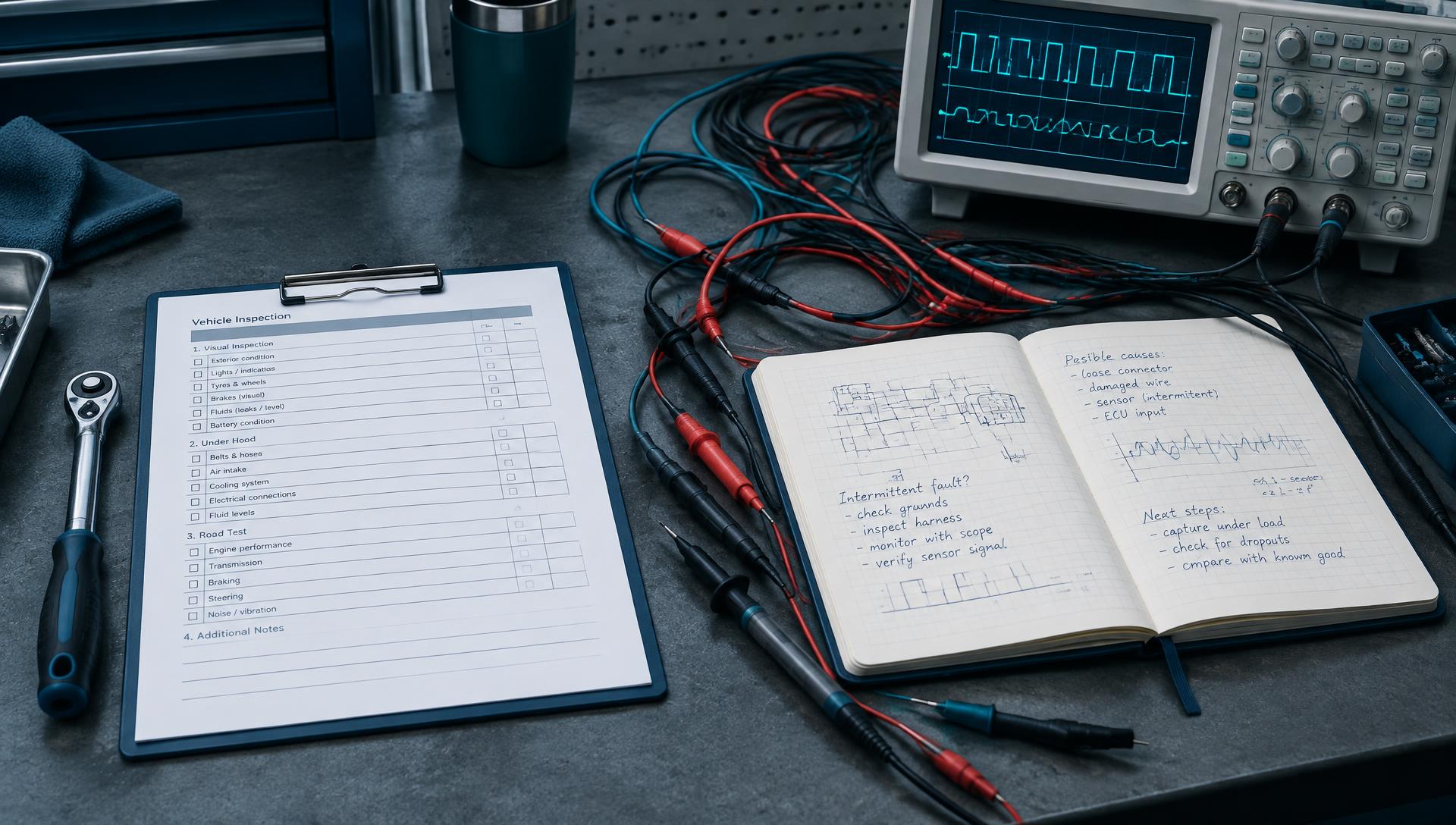
Following a prescribed component check is different from investigating an intermittent fault with several possible causes. Both may involve diagnosis, but the judgement and evidence required differ.
Stay close to the role
Define the tasks a technician is expected to perform and the required level of competence. Do not give an advanced diagnostic activity to a role whose work only requires a defined inspection procedure.
Assess the right actions
Build practical activities around the selected profile and task complexity. Observe how the technician follows the process, interprets evidence and confirms the result. Avoid reducing this context to a generic score.
Separate scope from level
Complexity describes the work. Competence describes how well someone performs it. Keeping them apart avoids profiles that ask everything of everyone.
Make it observable
For each task and complexity, describe what an assessor would see when the work is done to standard.
A practical example
Both a service technician and a diagnostic technician "diagnose". For the first, it means following a guided test plan; for the second, investigating an intermittent fault without one. (Illustrative.)
Questions we often hear
How many complexity levels do we need?
Few. Enough to distinguish the work your roles really differ on.
Is complexity the same as seniority?
No. A senior technician may still perform low-complexity tasks often.